Services
Structural Log Repair Services
Structural damage in a log home can affect far more than appearance. When load-bearing logs, corners, wall sections, or other critical components begin to deteriorate, the integrity of the entire structure may be compromised.
American Log Restoration specializes in structural log repair for homes and cabins affected by rot, water damage, insect activity, failed previous repairs, and long-term deterioration. Our team focuses on identifying the extent of the damage, stabilizing affected areas, and restoring the strength of the log structure using repair methods suited to the home’s existing construction.
Our Structural Log Repair Process
Every structural repair project begins with a careful evaluation of the affected area. The goal is to determine how much of the original log can be preserved and whether localized repair, partial replacement, or full log replacement is necessary.
Complete a Structural Assessment
We begin by evaluating the condition of the affected logs and surrounding wall system.
This may include checking for:
- Soft or deteriorated wood
- Rot extending into the interior of a log
- Water intrusion
- Insect damage
- Failed previous repairs
- Damaged log ends
- Movement around windows and doors
- Compromised corners or wall sections
The assessment helps determine whether the affected area can be repaired or whether replacement is necessary to restore structural stability.

Stabilize the Affected Area
When structural logs have deteriorated significantly, the surrounding section may need to be supported before damaged material is removed.
Proper stabilization allows repairs to be completed without placing unnecessary stress on nearby logs, openings, or wall sections.
This step is especially important when repairing load-bearing logs or damage around corners, doors, and windows.
Remove Damaged Wood
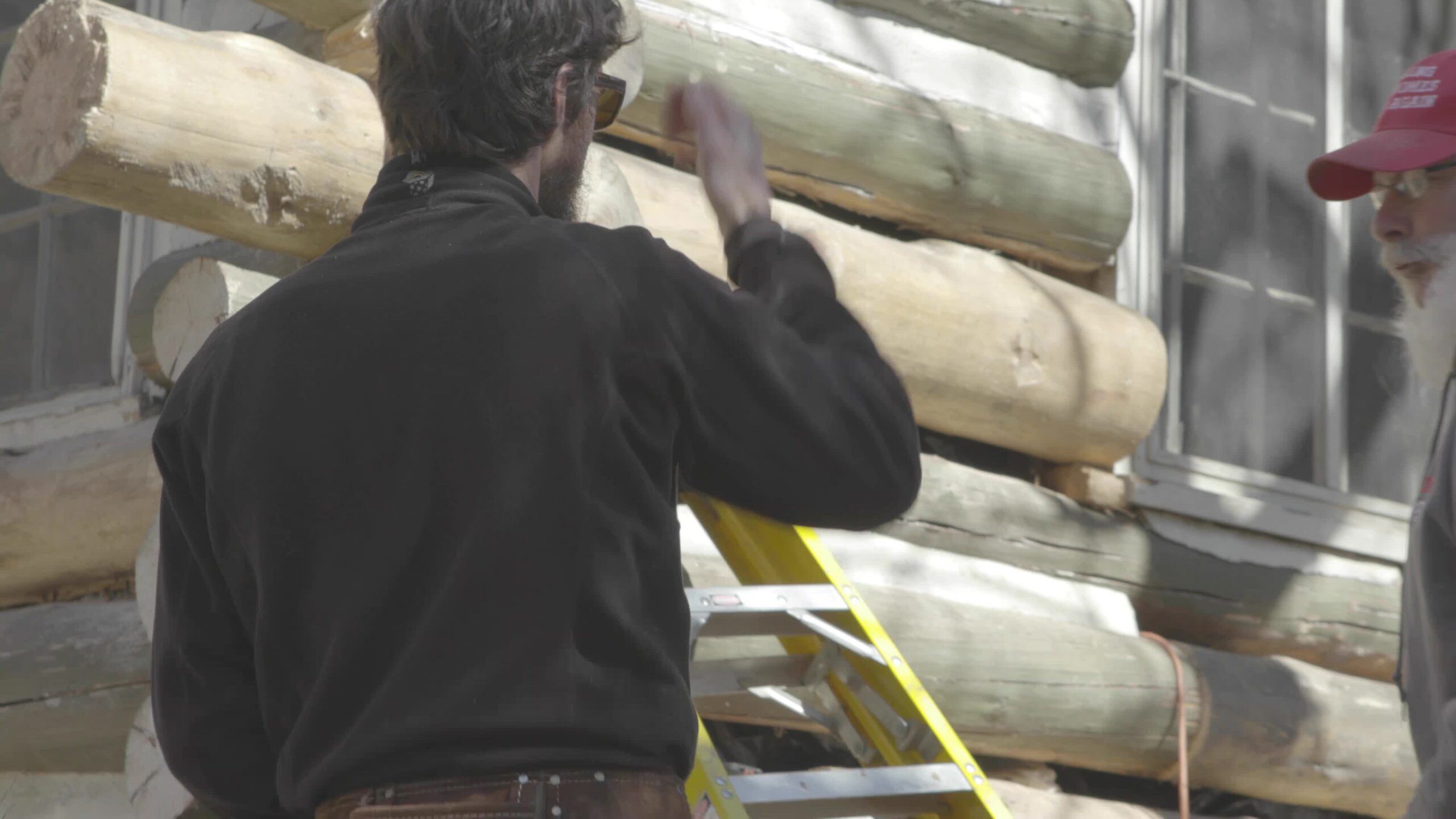
Once the area is secure, deteriorated material is carefully removed.
The amount of wood removed depends on how far the damage extends. In some cases, only a localized section may need to be addressed. In others, deterioration may require partial or complete log replacement.
Removing compromised material allows the remaining structure to be evaluated more accurately before the repair is completed.
Repair or Replace the Structural Log
The appropriate repair method depends on the condition of the original log.
Structural log repair may involve:
- Localized wood repair
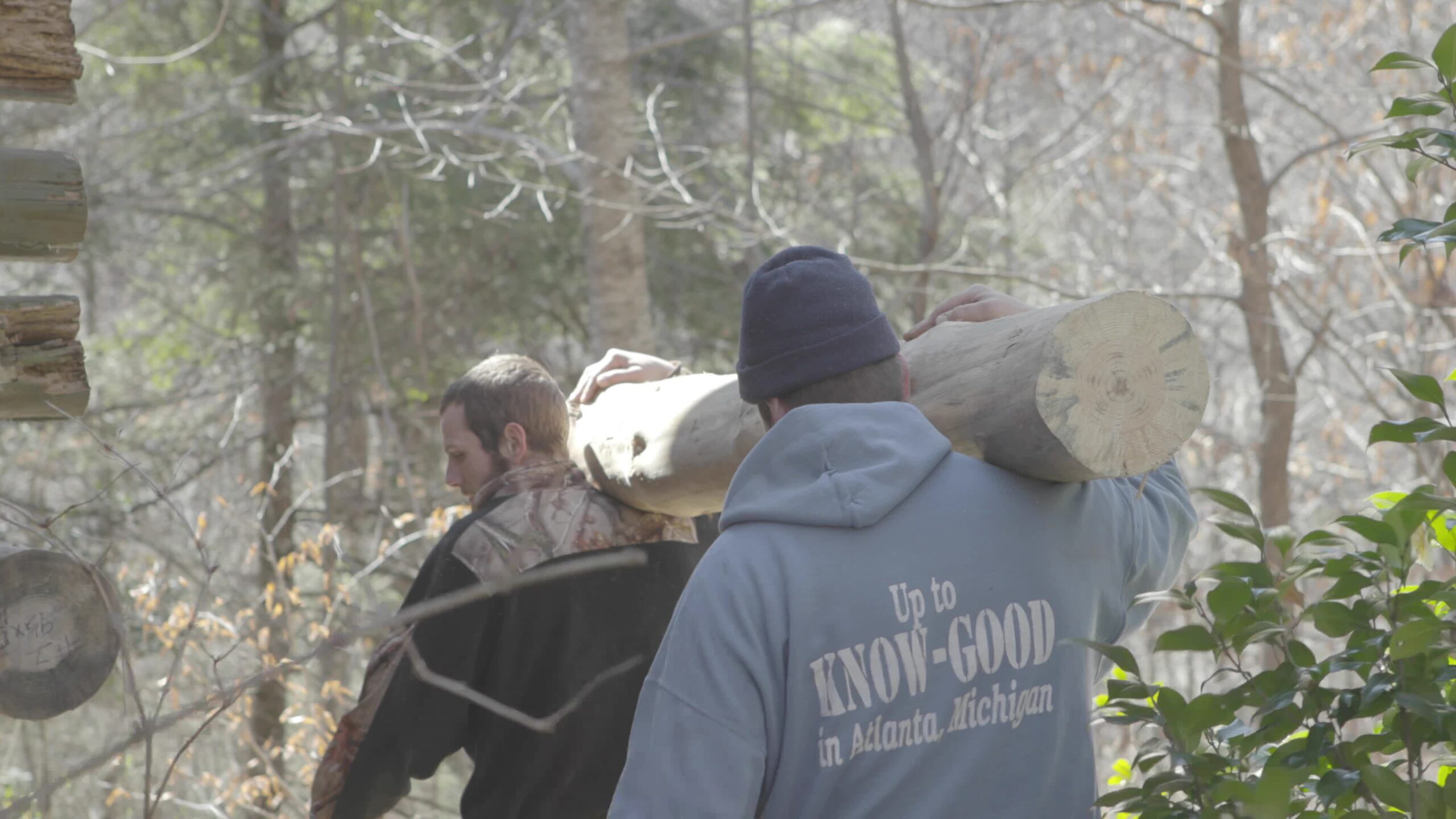
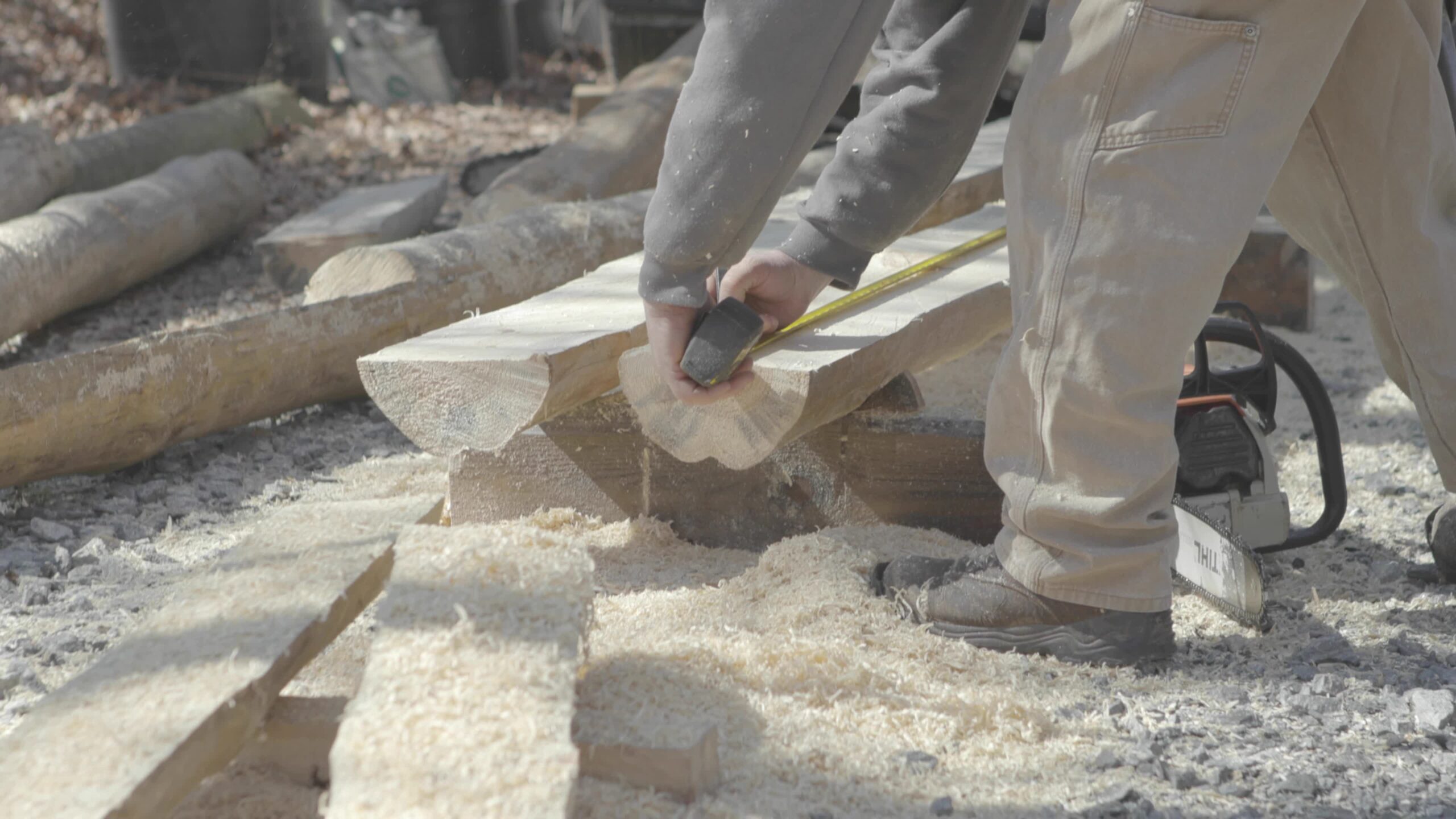
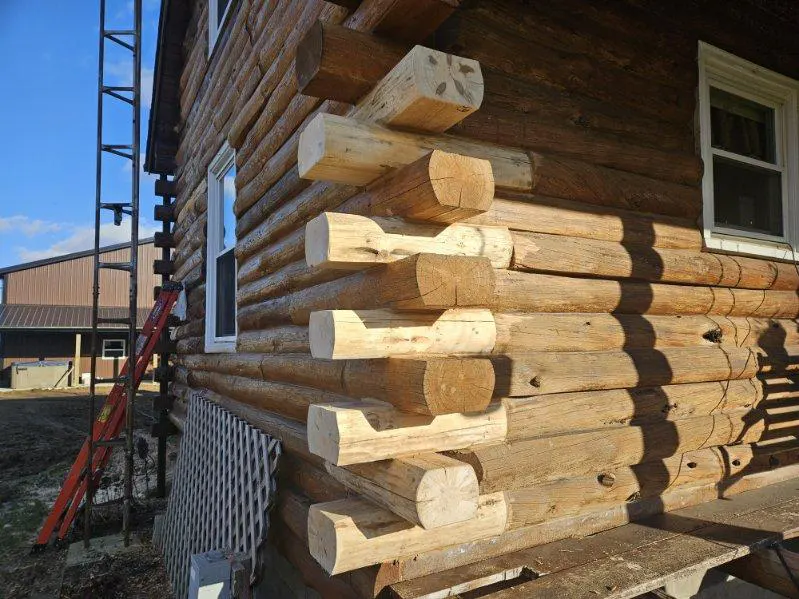
- Half-log replacement
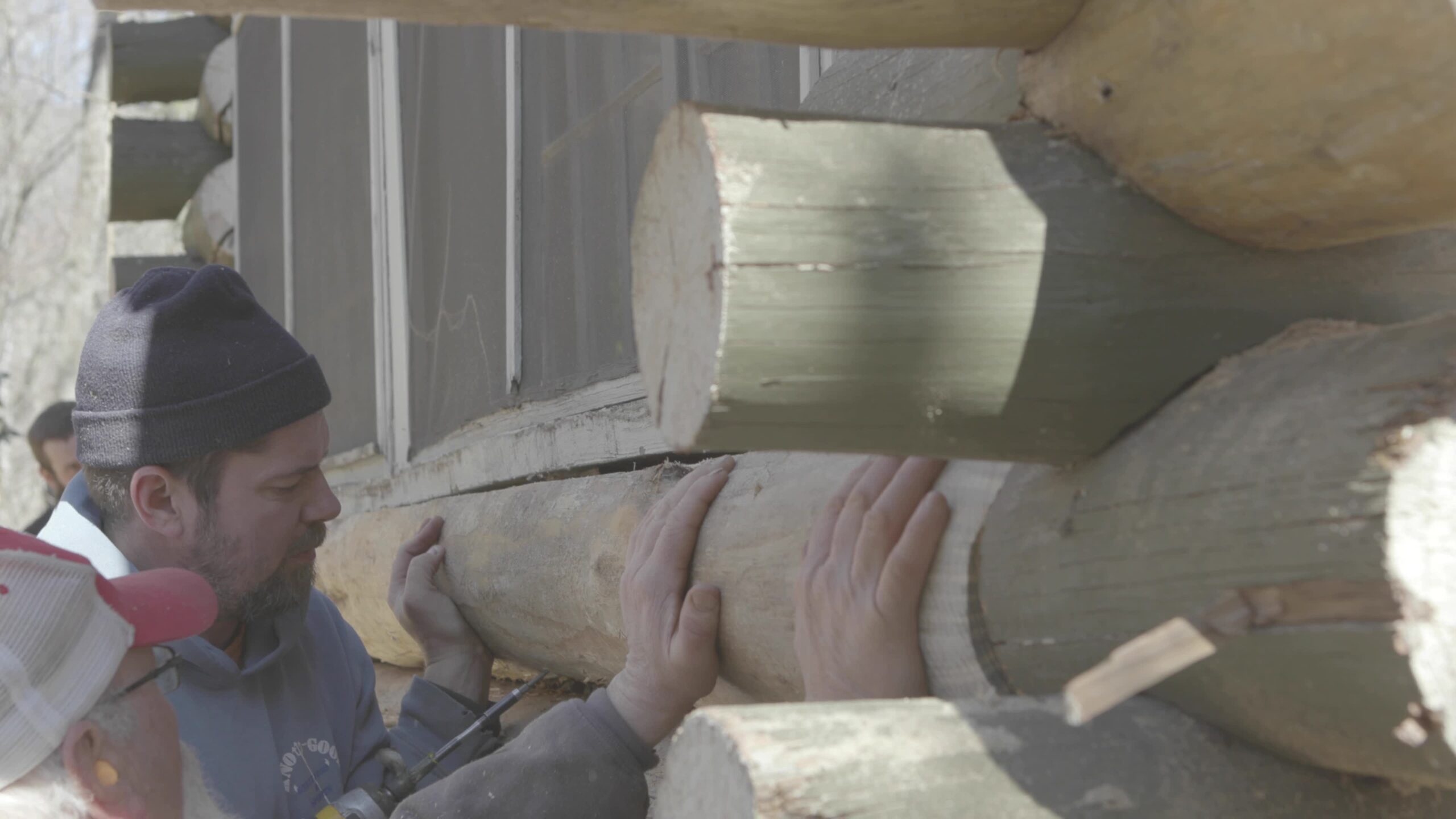
- Partial log replacement
- Log end replacement
- Full-length log replacement
- Structural reinforcement
Whenever possible, replacement material is selected and shaped to match the existing log profile, dimensions, and construction style.
Our goal is to restore structural integrity while preserving as much of the original home as practical.
Address the Cause of the Damage
Structural deterioration is often the result of an underlying problem.
Common causes include:
- Persistent moisture
- Roof or gutter runoff
- Failed chinking or caulking
- Poor drainage
- Insect activity
- Ground contact
- Previous improper repairs
Repairing the damaged wood without correcting the cause can allow the same problem to return.
Depending on the source of deterioration, additional services may include log rot repair, water damage repair, or chinking and caulking.
Signs Your Log Home May Need Structural Repair
Structural log damage can develop gradually, and the warning signs are not always obvious.
Homeowners should consider having the structure evaluated if they notice:
- Logs that feel soft or spongy
- Severe rot or deterioration
- Bowing or movement in a wall
- Gaps developing around windows or doors
- Damaged or deteriorating corners
- Crushed or compressed logs
- Large sections of insect damage
- Previous repairs that are failing
- Logs that have lost significant material
- Water damage affecting load-bearing areas
These symptoms do not always mean a major structural repair is necessary, but they should not be ignored.
What Causes Structural Damage in Log Homes?
Structural log problems usually develop when deterioration is allowed to progress over time.
Log Rot
Persistent moisture can allow fungi to break down the wood fibers within a log. As the affected material deteriorates, the log may gradually lose strength.
Professional log rot repair can help address localized deterioration before it progresses into a more extensive structural issue.
Water Damage
Leaks, drainage issues, failed flashing, and repeated runoff can expose the same section of a log wall to moisture for years.
When this moisture reaches structural logs, deterioration can spread beneath the visible surface.
Our log home water damage repair services focus on repairing damaged wood while also identifying the source of the moisture wherever possible.
Insect Damage
Wood-boring insects may damage logs from within, particularly where moisture has already weakened the wood.
Carpenter ants, termites, powderpost beetles, and other pests can contribute to deterioration that is not always immediately visible.
Learn more about wood-boring insect damage.
Failed Previous Repairs
Improper repairs can sometimes make structural problems worse.
Materials that trap moisture against the logs, poorly fitted replacement sections, or cosmetic repairs placed over deteriorated wood may conceal damage without correcting it.
A structural repair should address both the damaged material and the conditions that caused the failure.
Structural Log Repair vs. Log Replacement
Not every damaged structural log needs to be completely replaced.
If enough sound wood remains, a localized or partial repair may be possible. This can preserve more of the original structure while still restoring strength to the affected area.
Full log replacement may be recommended when:
- Rot extends deeply through the log
- A large portion of the log has deteriorated
- The log can no longer support its intended load
- Previous repairs have failed
- Multiple areas of the same log are compromised
The best approach depends on the extent and location of the damage.
Structural Repairs for Different Log Construction Styles
Log homes can be built using a wide variety of construction methods, profiles, and materials.
Structural repairs may be required on:
- Handcrafted log homes
- D-log structures
- Full-scribe log homes
- Butt-and-pass construction
- Historic log cabins
- Modern log homes
The repair method should account for how the existing logs fit together and how loads are transferred through the wall system.

Why Choose American Log Restoration?
Structural log repair requires experience working specifically with log construction.
American Log Restoration focuses on the structural side of log home restoration, including damaged log repair, log replacement, rot repair, and restoration work.
Our approach is centered on:
- Identifying the true extent of the damage
- Preserving sound original material where practical
- Matching replacement logs to the existing structure
- Addressing underlying moisture or deterioration issues
- Restoring structural integrity rather than masking visible damage
Whether the problem involves one damaged log or a larger section of the structure, the repair should be based on the actual condition of the home.
Schedule a Structural Log Repair Assessment
Structural deterioration should be evaluated before it progresses into a larger repair.
If you’ve noticed damaged logs, rot, movement, water intrusion, or previous repairs that appear to be failing, American Log Restoration can help determine the appropriate next steps.
Contact us today to discuss your property and learn more about our structural log repair, log home repair, and log replacement services.
Restore. Protect. Preserve.