Michigan Log Home & Cabin Repair | 45+ Years of Restoration Expertise

American Log Restoration

Comprehensive log home & cabin repair, maintenance, and restoration services to keep your home looking its best.

Call Today: (877) 788-5647
Call Today:
(877) 788-5647
Where we work

Log Home Repair and Restoration Services in Michigan

American Log Restoration Inc. offers full-service log cabin repairs throughout Michigan. Whether it’s a simple fix or a complete log cabin restoration, we are here to provide a suitable solution. Here is more information about our log home repair services in Michigan:

About the Area

Michigan has a rich history of log cabins, with the oldest surviving cabin built in 1780 on Mackinac Island. Over 105 log cabins still stand in the state, reflecting its pioneer past. Various historic villages across Michigan, such as Crossroads Historic Village and Troy Historic Village, feature restored log cabins from the 19th century, providing insights into the lives of early settlers. Michigan also hosts a yearly festival celebrating its pioneer heritage and log cabin dwellings.

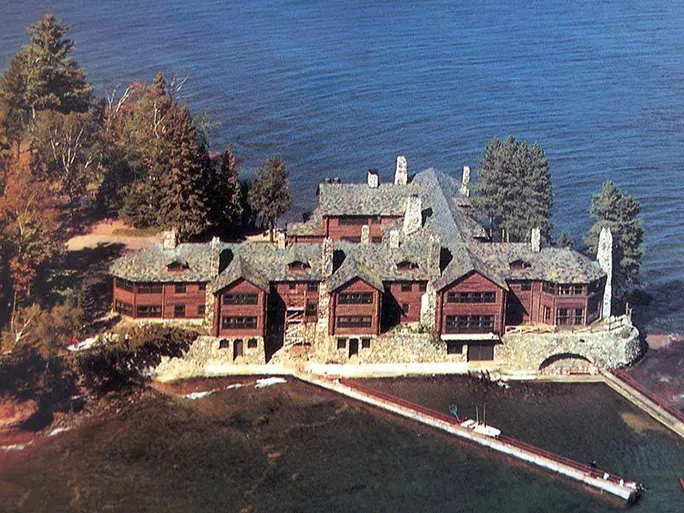
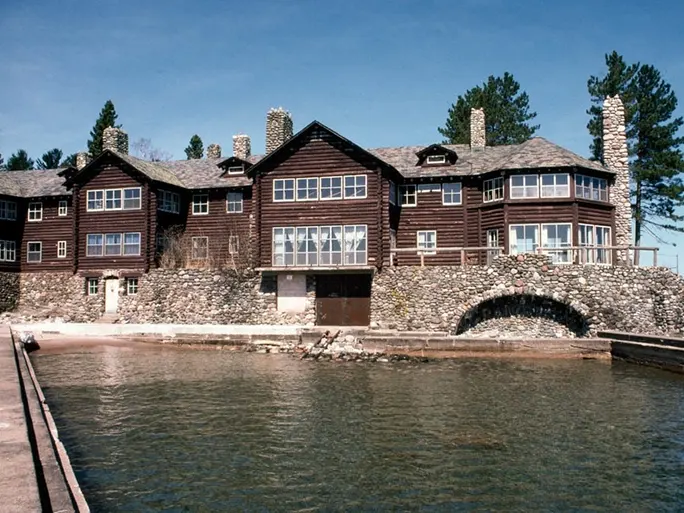
Michigan is home to the second-largest private log home in the United States, Granot Loma, located in Marquette. It spans 26,000 square feet with 50 rooms, including 23 bedrooms and 13 bathrooms. American Log Restoration did a complete log home restoration on Granot Loma in 1994.  Some companies in Michigan also focus on providing sustainable log cabin kits and custom-built log homes, reflecting the ongoing interest in log home living. Our log cabin repair services contribute to the appeal of these structures, helping to preserve their value and structural integrity.

Log Home Restoration Services

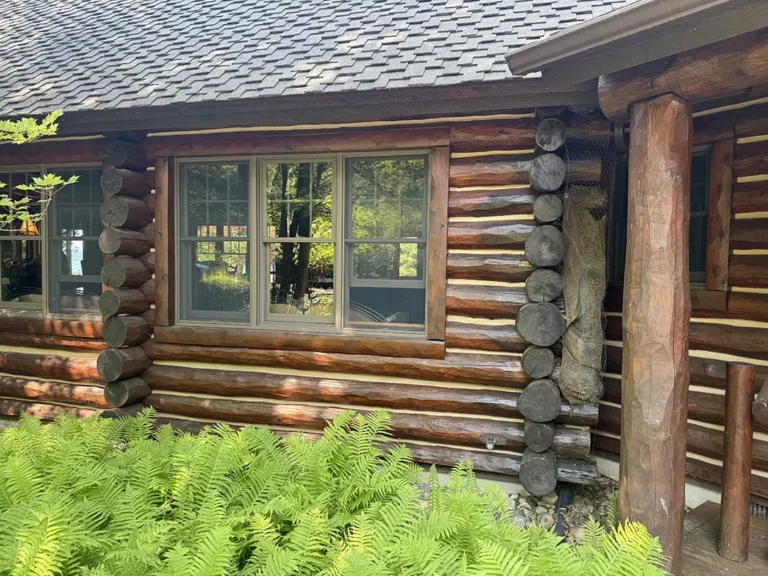
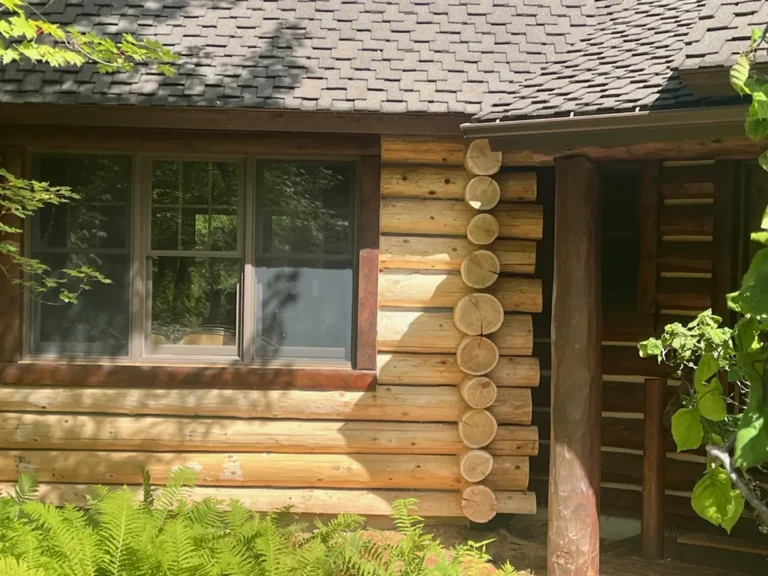
American Log Restoration Inc. provides Michigan residents with log home repair services for both historical and residential log homes. Taking proper care of your log cabin will help enhance longevity and aesthetics. Our services include a comprehensive evaluation of your space to determine what areas need repair or replacement.

Once we have evaluated your log cabin, we will clean and prep the surface of the wood for better sealant or stain application. Any damaged or moldy wood pieces will need to be removed or hollowed out, and then we will apply a treatment to prevent future moisture accumulation. Our team can also use an epoxy resin that provides a shield against moisture and weather-related damage.

Due to the regular precipitation and humid weather conditions in Michigan, proper maintenance is necessary to protect your log cabin from decay. Check your logs regularly for hollow sounds, as this may indicate there is rot or an insect infestation. You should also watch for holes or soft wood. Contact our team immediately if you notice any discoloration or signs of an insect infestation. We will quickly treat the issue and apply the necessary preventative measures to make sure the problem does not reoccur.

Benefits of Log Cabins

Log cabins in Michigan offer a safe, comfortable living environment. Whether you use your cabin as a permanent dwelling or a vacation home, you can enjoy benefits like reliable strength and longevity. When properly cared for, your wood building will last for long periods of time. Wood cabins also boast excellent sound insulation and humidity control. Regular log home restoration helps preserve their integrity, making them a sustainable and low-maintenance choice for a variety of uses.

Get Log Home Repairs in Michigan

The team at American Log Restoration Inc. provides log cabin repair services for customers in Michigan and several other states. We also offer services like chinking, caulking, and thermal imaging to help protect your log home from future damage. Contact us today to learn more about our services or to schedule a consultation.

Areas We Serve in Michigan

American Log Restoration proudly serves log homeowners across Michigan, including:

Detroit • Grand Rapids • Lansing • Kalamazoo • Ann Arbor • Traverse City • Muskegon • Holland • Saginaw • Midland • Bay City • Marquette • Petoskey • Gaylord • Alpena • Escanaba • St. Ignace • Mackinaw City

Recent Log Repair Project in Michigan

Michigan Log Home Repair FAQs

Yes, Michigan waterfront log cabins are significantly more vulnerable to mold, mildew, and wood rot than inland cabins because they exist in a consistently wetter, more humid microclimate that keeps logs damp longer and accelerates fungal growth and decay.

Why waterfront cabins face higher risk

  • Lakefront locations experience higher ambient humidity, more frequent fog, and slower drying after rain, so exterior logs stay damp longer and more often—the ideal conditions for decay fungi
  • Wind off the water drives rain and spray onto one or two “weather” sides of the cabin, repeatedly soaking the same walls, corners, and log ends, especially when roof overhangs or gutters are inadequate
  • The combination of persistent moisture and limited air circulation creates perfect conditions for both surface growth and deep wood rot

How moisture damage shows up

  • More frequent surface mold and mildew, dark or green staining, and soft or discolored spots appear on shaded and windward sides, lower logs near decks or grade, and around joints where water lingers
  • Over time, these moisture-loaded areas develop soft, spongy, or hollow wood, failed stain or clear coat, and attract wood-boring insects (carpenter ants, powder post beetles) that target damp, weakened logs
  • Waterfront-facing walls and exposed log ends deteriorate faster than protected areas, often showing damage years before inland cabins of the same age

How to reduce waterfront vulnerability

  • Design and drainage are critical: install generous roof overhangs, maintain functional gutters and downspouts, keep logs well above grade, and detail decks to minimize splash-back onto walls
  • Use a breathable log stain system compatible with existing finishes, maintain regular washing and re-coating schedules, and apply borate treatments to bare or stripped wood to slow decay and deter insects in the wetter environment
  • Inspect waterfront-facing walls more frequently—at least twice yearly: probe any dark, green, or grey soft areas, listen for hollow sounds when tapping logs, and address mold or mildew immediately rather than letting it accumulate through multiple seasons
  • Consider installing dehumidifiers inside the cabin and ensuring proper ventilation to manage interior moisture levels, which are typically higher in lakefront properties

The key to protecting a waterfront log cabin is proactive maintenance—what might be acceptable upkeep inland becomes insufficient at the water’s edge, where the harsher moisture conditions expose any weakness in finishes, drainage, or wood condition much faster.

Michigan log and waterfront homeowners should complete a focused round of fall maintenance to protect against cold, wind, moisture, and heavy snow loads before winter arrives. Proactive preparation prevents costly damage from ice dams, drafts, and freeze-thaw cycles.

Roof, gutters, and snow management

  • Clean all gutters and downspouts in late fall so melting snow can drain freely instead of backing up and causing ice dams or leaks into log walls and eaves
  • Visually inspect the roof for loose, damaged, or missing shingles or metal fasteners and repair them before snow loads arrive—pay special attention to valleys and eaves where problems start
  • Prepare a roof-safe snow removal plan with tools (roof rake, safe access) ready to clear excess snow from lower roof sections during major storms to reduce load and prevent ice dams

Logs, stain, and weatherproofing

  • Walk the exterior looking for peeling or failed stain, dark or green patches, checks holding water, and soft or spongy spots in lower logs and exposed corners—mark problem areas and schedule repairs during suitable weather
  • Inspect and touch up caulking, chinking, and weather-stripping at corners, between logs, and around windows and doors to eliminate drafts and stop wind-driven moisture penetration
  • On a mild, above-freezing day, perform a light wash to remove surface dirt and mildew so logs enter winter cleaner and drier

Heating, plumbing, and interior moisture control

  • Service your heating system (furnace, boiler, mini-split, or wood stove) and change filters so it can handle sustained Michigan cold efficiently
  • For year-round use: insulate exposed pipes, protect crawlspace plumbing, and seal air leaks that could freeze lines. For seasonal cabins: shut off water, drain or blow out all pipes, and add antifreeze to traps
  • Check attic and crawlspace ventilation and inspect for signs of condensation or past leaks—moisture buildup in hidden wood during freeze-thaw cycles leads to rot

Site and waterfront preparation

  • Trim overhanging or dead branches near the cabin to reduce winter storm damage risk to the roof, overhangs, and railings
  • At lakefront properties: secure or remove docks, lifts, and shoreline items, and verify that grading and hard surfaces direct meltwater away from the cabin, not toward lower log courses

Safety and comfort checks

  • Test smoke and CO detectors, inspect and clean chimneys and flues, and verify fireplaces and wood stoves are safe for heavy winter use
  • Seal obvious drafts at doors, windows, and utility penetrations with caulk, foam, or weather-stripping to improve comfort and reduce heating costs during long cold snaps

Timing matters: Complete these tasks in October or early November before temperatures consistently drop below freezing, as many repairs (caulking, staining, washing) require mild weather to be effective.

For most Michigan log cabins, the best window for exterior restoration—including stripping, log repair, staining, and chinking—is late spring through early fall, roughly May through September, with the prime months being June through August. This period offers the most favorable temperatures, humidity levels, and daylight for products to cure properly and crews to work efficiently.

Why late spring through early fall is optimal

  • Most stains, caulks, and chinking products require daytime temperatures consistently above 50–55°F with no hard freezes at night to bond and cure correctly
  • Dry weather stretches are more common during this window, which is critical because media blasting, washing, wood drying, and stain applications all require surfaces to be dry and remain dry for extended periods
  • Longer daylight hours allow crews to complete cleaning, repair, and multiple application steps in sequence without rushing, improving both finish quality and long-term durability

Regional timing variations across Michigan

  • Northern Michigan and the Upper Peninsula typically have a shorter exterior window—often late May or June through early September—due to later springs and earlier fall frosts
  • Southern and west-central Michigan can often start earlier in spring and extend later into fall, but cool nights remain a concern, requiring careful product selection and monitoring for shoulder-season work

Interior and structural work timing

  • Interior work and structural log repair—including cutting out and replacing damaged logs, framing work, and interior remodeling—can happen almost year-round as long as the building can be reasonably heated and protected from weather
  • Many Michigan log restoration contractors shift to heavier structural and interior projects during late fall and winter, then prioritize blasting, staining, and exterior caulking once spring conditions improve

Practical scheduling tips

  • Contact restoration companies several months in advance—reputable Michigan log specialists often book out a season or more, and prime summer slots fill quickly
  • Aim to complete major exterior restoration before heavy fall rains and the first freeze so stains and sealants have adequate time to cure and protect logs heading into winter
  • For waterfront or heavily weather-exposed cabins, schedule earlier in the season to allow time for addressing surprises (hidden rot, additional log replacement) without running into unfavorable weather
  • If you discover urgent issues in fall or winter, focus on temporary weatherproofing and structural stabilization, then schedule comprehensive exterior restoration for the following spring/summer season

Bottom line: Book early for summer work, plan exterior projects during warm, dry months, and save structural repairs for year-round flexibility.

Customer Testimonials :

Our entire experience with American Log Restoration was exceedingly satisfactory. The finished work is perfect! Thank you!
Valerie Brady
Alex was a great craftsman! Excellent work ethic, professional, personable, and tolerated working in 90 degree temps with matching humidity! What a great job! Second time I have welcomed this organization back. I would not use anyone else!
Lisa Byrd
We purchased a log home that was in need of log repair and replacement. After obtaining multiple quotes, we opted to go with American Log Restoration. The crew was with us on site for a week and was awesome. Very knowledgeable and great quality work. They took the time to explain the process and what to look for in the future.
Laura Valente
Mike and Junior, from Log Home Restoration, did an excellent job restoring my log home. They were skilled, professional, efficient, and left the work area clean. They brought all of the correct materials, and did the job just like we had laid out in the contract. They were a pleasure to work with!
Debbie Staton
Alex and Dan were incredible craftsmen. We talked about the repairs when they first arrived, we got the business stuff out of the way, and they got to work quickly. They cleaned up along the way as they worked, they were very polite, they explained when I had questions. That wall repair is better than I ever would have imagined it would be!! It is just incredible!!
Anita Yarrish